
Miguel Ángel Iglesias
Chaosmos: Order within Chaos
Seoul · September 3 – October 17, 2026
Chaosmos: Order within Chaos
Seoul · September 3 – October 17, 2026
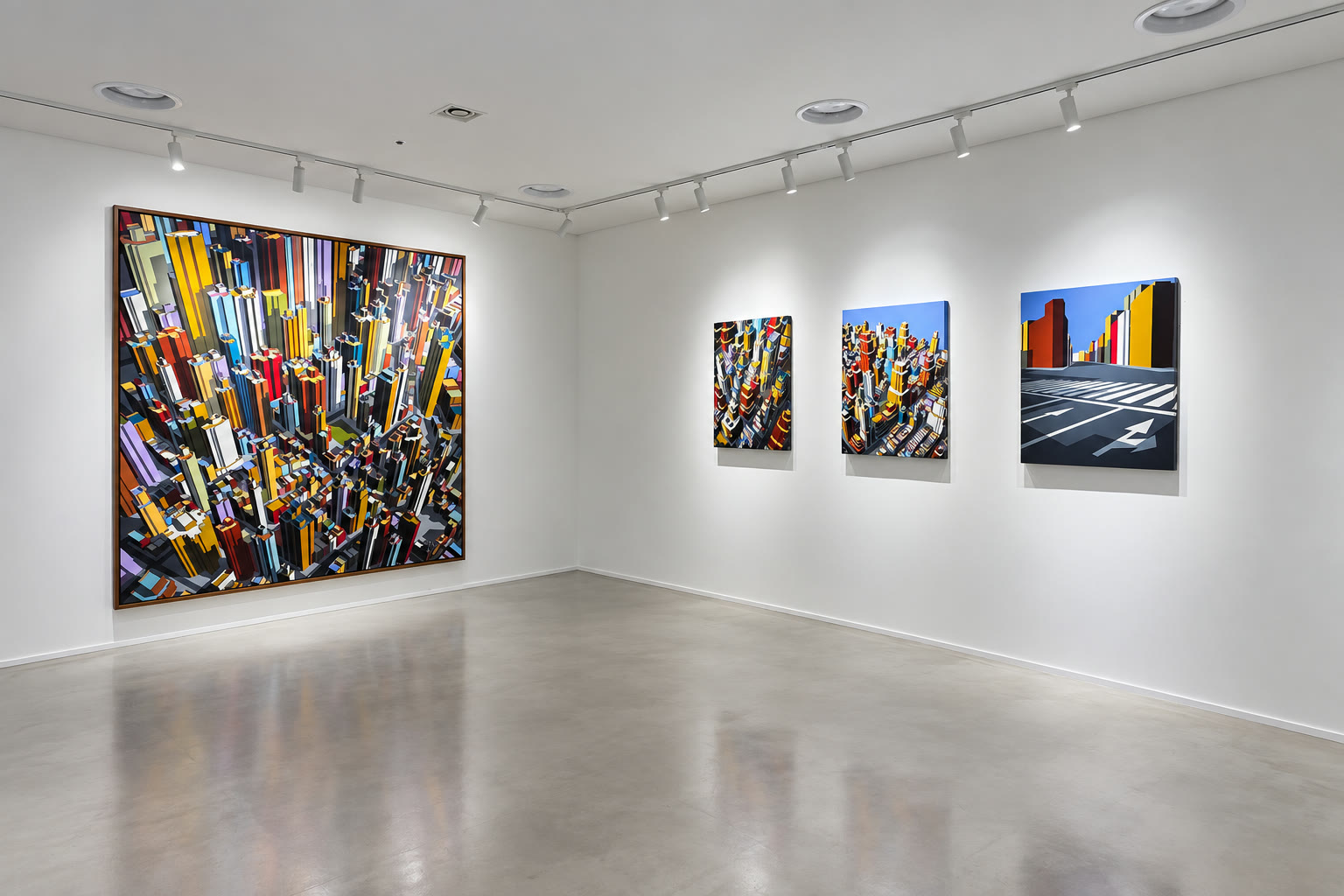
Installation view, Gallery Chang Seoul, 2026
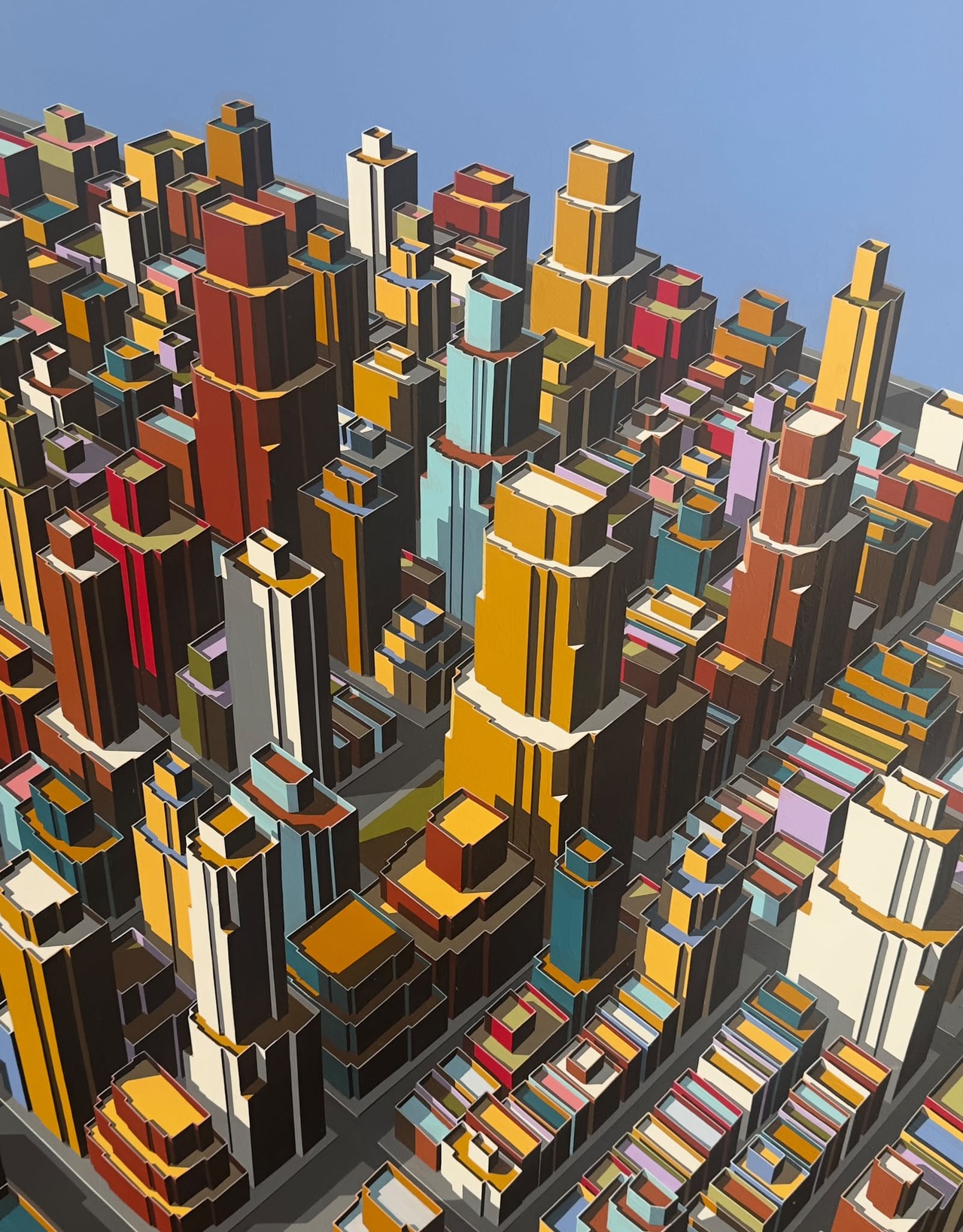
Chaosmos: Order within Chaos explores the tension between disorder and structure in the work of Miguel Ángel Iglesias. Through layered colors, dynamic lines, and shifting forms, Iglesias creates compositions that appear spontaneous yet remain carefully balanced. What first seems chaotic gradually reveals an underlying rhythm—an internal logic formed through repetition, movement, and contrast.
Rather than presenting chaos and order as opposites, Iglesias allows them to coexist. His paintings move between control and intuition, density and openness, fragmentation and unity. The viewer’s eye is drawn across the surface, discovering new relationships between gestures, colors, and forms with each encounter. In this sense, the work is not fixed; it continues to reorganize itself through the act of looking.
The title Chaosmos brings together “chaos” and “cosmos,” suggesting a world in which disorder itself becomes a form of structure. Through this exhibition, Iglesias invites us to consider how balance can emerge from instability, and how complexity can hold its own sense of coherence. His paintings do not resolve chaos—they reveal the order already contained within it.
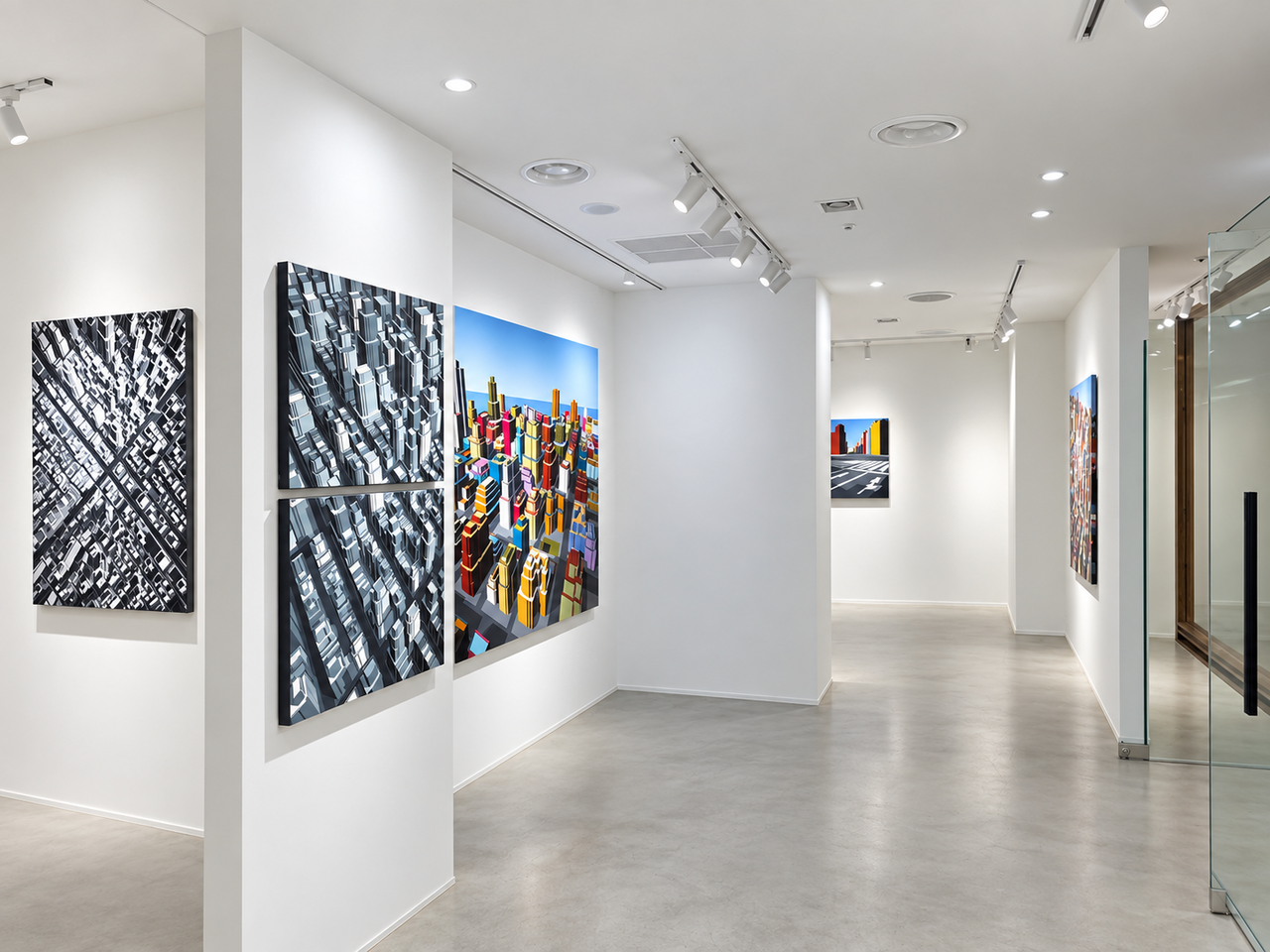
Installation view
Gallery Chang Seoul, 2026
Installation view
Gallery Chang Seoul, 2026
Installation view
Gallery Chang Seoul, 2026
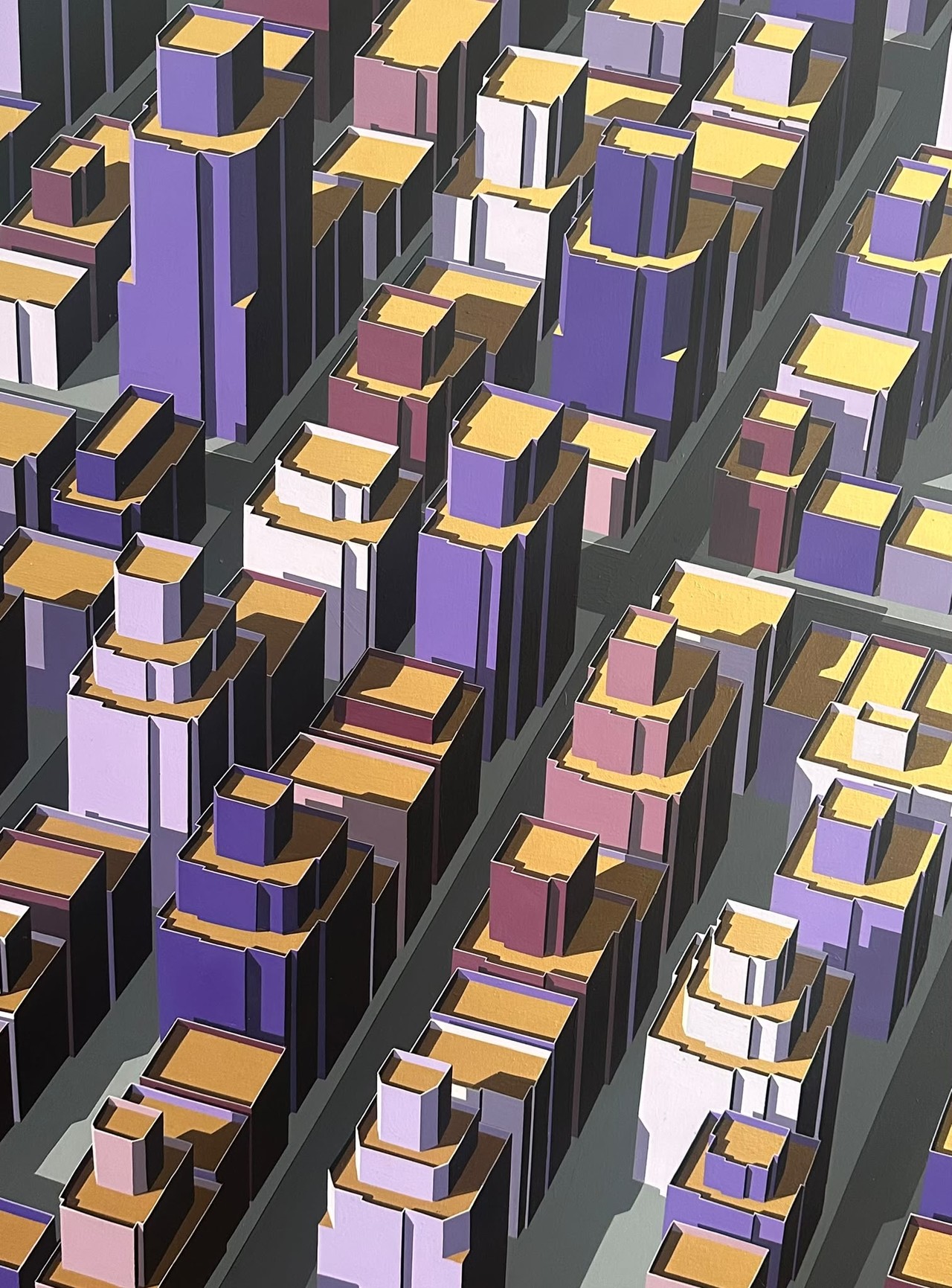
Artist Name
Title of Work, 2026
Oil on canvas
100 × 80 cm
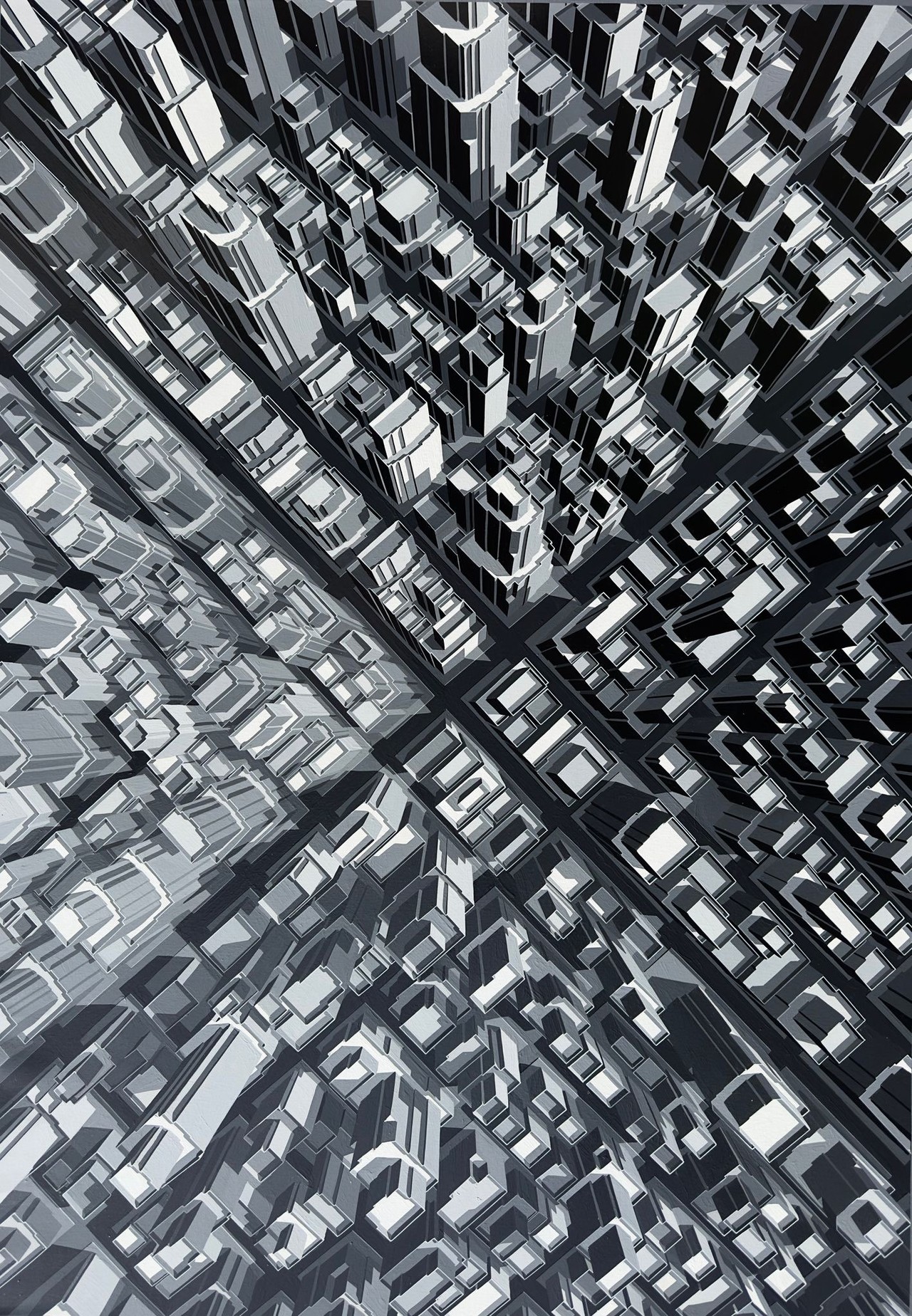
Artist Name
Title of Work, 2026
Oil on canvas
100 × 80 cm
Artist Name
Title of Work, 2026
Oil on canvas
100 × 80 cm
Artist Name
Title of Work, 2026
Oil on canvas
100 × 80 cm
Artist Name
Title of Work, 2026
Oil on canvas
100 × 80 cm
Artist Name
Title of Work, 2026
Oil on canvas
100 × 80 cm
Miguel Angel Iglesias
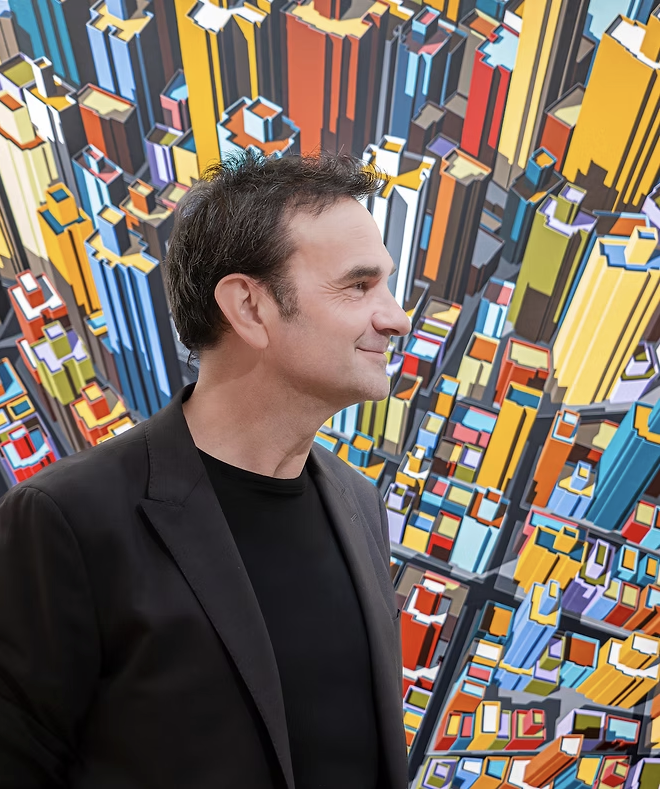
Portrait of Miguel Ángel Iglesias
Miguel Ángel Iglesias Fernández (b. 1971) is a Spanish contemporary painter known for his highly distinctive interpretations of the modern city. Working primarily with urban landscapes viewed from elevated or aerial perspectives, Iglesias transforms skyscrapers, streets, and architectural structures into dense compositions of color, geometry, light, and shadow. Rather than documenting a particular city, he constructs imagined urban environments that exist somewhere between physical reality and psychological space.
The city in Iglesias’s work is both monumental and strangely intimate. Human figures are frequently absent, yet their presence is implied through the enormous structures they have created and inhabit. From above, buildings become almost sculptural forms—compressed, repeated, and reorganized through intense fields of color. His paintings balance rational architectural order with emotional intensity, turning the contemporary metropolis into a place of reflection on anonymity, coexistence, solitude, and the relationship between human beings and the spaces they construct.
Iglesias is significant for developing an immediately recognizable visual language that transforms urban landscape painting into an exploration of contemporary existence. His work moves between figuration and abstraction, architectural precision and imaginative reconstruction, using the city as both subject and metaphor. At a time when urban environments increasingly shape how people experience the world, Iglesias presents the metropolis not simply as architecture, but as a reflection of modern identity, emotion, and human experience.